
Implant-Supported Dentures vs Traditional Dentures: Which Is Better?

Somewhere in the last decade, denture patients started asking a more specific question than how much do dentures cost. They started asking whether a denture could actually feel secure instead of just fitting. That question is what drives most of the calls we get about implant-supported dentures here in Greensboro, NC. A traditional denture rests on the gum ridge and relies on suction, adhesive, and a bit of luck to stay in place. An implant-supported denture attaches to two or more implants anchored in the jawbone, and patients who have worn both rarely describe the difference as subtle.
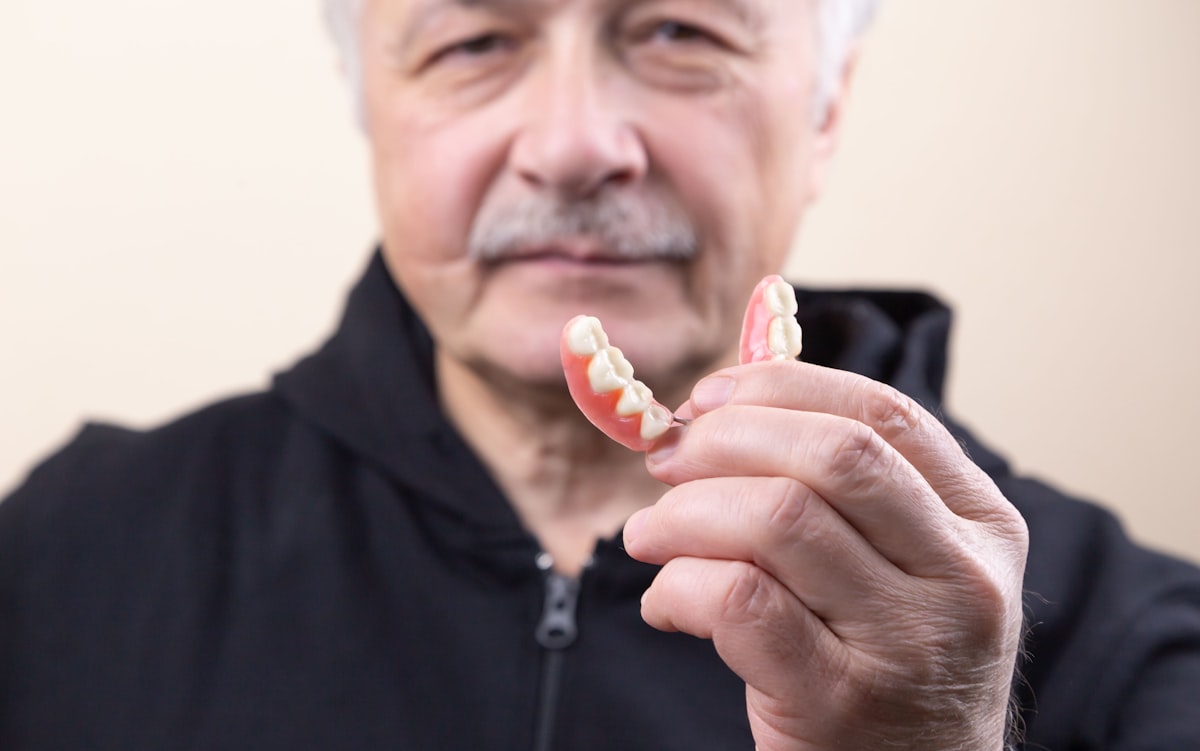
How Implant-Supported Dentures Actually Work
An implant-supported denture, sometimes called an overdenture, isn't the same as a full-arch fixed prosthesis like All-on-4, though people mix the two up constantly. With an overdenture, two to four implants are placed in the jawbone, and the denture clips onto small ball or locator attachments on top of them. You can still take it out at night to clean it. What changes is that the denture no longer moves around when you talk, chew, or laugh, because it's locked onto the implants instead of floating on the gum tissue. Healing after implant placement typically takes three to six months before the final denture is fitted, and implants placed for this purpose succeed in the 95 to 98 percent range when the patient has adequate bone and follows the healing protocol.
One pattern I see consistently in my Greensboro practice: patients switching from a traditional lower denture to an implant-supported version notice the difference on the bottom arch far more than the top. That tracks with the anatomy, since the lower denture was always the weaker link, so that's where implants make the biggest functional jump. Patients who are happy with their upper denture but frustrated with the lower one are, in my experience, some of the best candidates for a hybrid approach: keep the upper as-is and stabilize just the lower arch with two implants.
Where Traditional Dentures Still Fall Short
Traditional dentures aren't a bad option for everyone, and there are plenty of patients for whom they still make sense. But the mechanics work against the lower arch in particular. The upper denture has the palate to create suction against, which gives it real stability. The lower jaw doesn't offer that same surface area, so a traditional lower denture depends almost entirely on the shape of the ridge and a layer of adhesive. As the jawbone naturally resorbs over the years, that fit gets worse, not better. Most traditional dentures need a reline within two to three years and a full remake every five to seven, and patients often describe a slow decline in confidence around eating and speaking somewhere in that window.
If you're in that stretch right now, wondering whether another reline is worth it or whether it's time to look at something different, here's what I'd tell you: the honest answer depends less on your age and more on how much bone you have left to work with.
What Recovery and Adjustment Actually Look Like
For patients moving from traditional dentures to implant-supported ones, the surgical part is usually the easy part. Implant placement itself takes about an hour to ninety minutes depending on how many implants are being placed, and most patients are back to normal activity within a few days. The bigger adjustment is mental: relearning that a denture which used to shift now won't. It genuinely surprises people how much they were compensating without realizing it, favoring one side while chewing, avoiding certain foods, holding their jaw a particular way when they talked. Those habits usually fade within a few weeks of getting used to a stable prosthesis.
Cost Differences Patients Should Understand Upfront
Implant-supported dentures cost more upfront than traditional dentures, and it's worth being direct about that rather than dancing around it. A traditional denture is a relatively accessible option, while an implant-supported overdenture involves the surgical placement of implants in addition to the prosthesis itself. What often gets left out of that comparison is the long-term cost of traditional dentures: the relines, the adhesive, and the eventual remake every five to seven years. Implants themselves can last fifteen to twenty years or longer with routine care. For patients weighing the decision, we walk through financing options including CareCredit and Sunbit, which spread the cost into monthly payments rather than one lump sum.
Who Is a Good Candidate for Implant-Supported Dentures
Bone density is the main factor that determines candidacy, more than age. Patients who have worn traditional dentures for many years sometimes have more bone loss than someone who lost teeth more recently, simply because the jawbone resorbs faster when it isn't being stimulated by tooth roots or implants. That doesn't rule someone out on its own, but it may mean a bone graft becomes part of the plan. We see this question often from patients coming in from Summerfield and Oak Ridge, since the practice sits close enough that a consultation is an easy trip, and we also see it from patients driving over from Burlington. A 3D scan during the first visit tells us within minutes whether standard implants will work or whether additional planning is needed.
If you want more detail before your visit, our dental implants page at ljfamilydentist.com/dental-implants-greensboro-nc walks through the process step by step, and our patient resources page at ljfamilydentist.com/patient-resources answers common first-visit questions.
Frequently Asked Questions About Implant-Supported Dentures
Can I switch from a traditional denture to an implant-supported one later, or do I need to decide now? You can switch later in most cases. Plenty of our patients wore traditional dentures for years before deciding to add implants. The main variable is bone volume, so the earlier that conversation happens after tooth loss, the more options are usually on the table.
How many implants do I actually need? For a lower overdenture, two implants is often enough to dramatically improve stability. A full fixed arch, like All-on-4, typically uses four to six. We recommend the number based on your bone structure and how much stability and function you're looking for, not a one-size-fits-all number.
Will an implant-supported denture look different from a regular denture? Not from the outside. The teeth themselves can look identical to a well-made traditional denture. What changes is underneath, in the attachment system connecting it to the implants, which patients can't see and, once they're used to it, mostly forget is even there.
Ready to talk to our expert team? Dr. Brenes and the team at Lake Jeanette Dentistry are accepting new patients in Greensboro, NC. Call (336) 545-4281 or visit ljfamilydentist.com to book your consultation.
Comments