
Dental Implants vs. Dental Bridge: Which Option Replaces a Missing Tooth Better?

Updated: Jul 31
Ask ten dentists which they'd choose for a missing molar, and you won't get ten identical answers. You'll get ten different questions back about the patient's jawbone, gum health, and budget. That's the honest starting point for anyone comparing a dental implant vs bridge to replace a missing tooth, and in my Greensboro, NC practice this comparison comes up almost weekly. The right answer depends less on which option is objectively better and more on what your mouth is actually working with, what you can commit to for maintenance, and how long you want the fix to last.
What a Dental Bridge Actually Does
A traditional bridge replaces a missing tooth by anchoring an artificial tooth, called a pontic, to the two teeth on either side of the gap. Those neighboring teeth get shaved down and capped with crowns that hold the bridge in place. It's a well-established restoration that a general dentist can typically complete in two visits, and for the right patient it works well for 7 to 10 years, sometimes longer with good care.
The tradeoff is structural. Grinding down two healthy teeth to support a bridge is permanent, and you can't undo that preparation later. Because a bridge sits on top of the gum rather than replacing the tooth root underneath it, the jawbone in that missing-tooth site has nothing stimulating it anymore. Bone doesn't stay put just because it's not being asked to do anything; it resorbs over time, and I've had patients come in ten years after a bridge was placed with visible bone loss and a gap developing under the pontic that trapped food and irritated their gums.
What a Dental Implant Actually Does
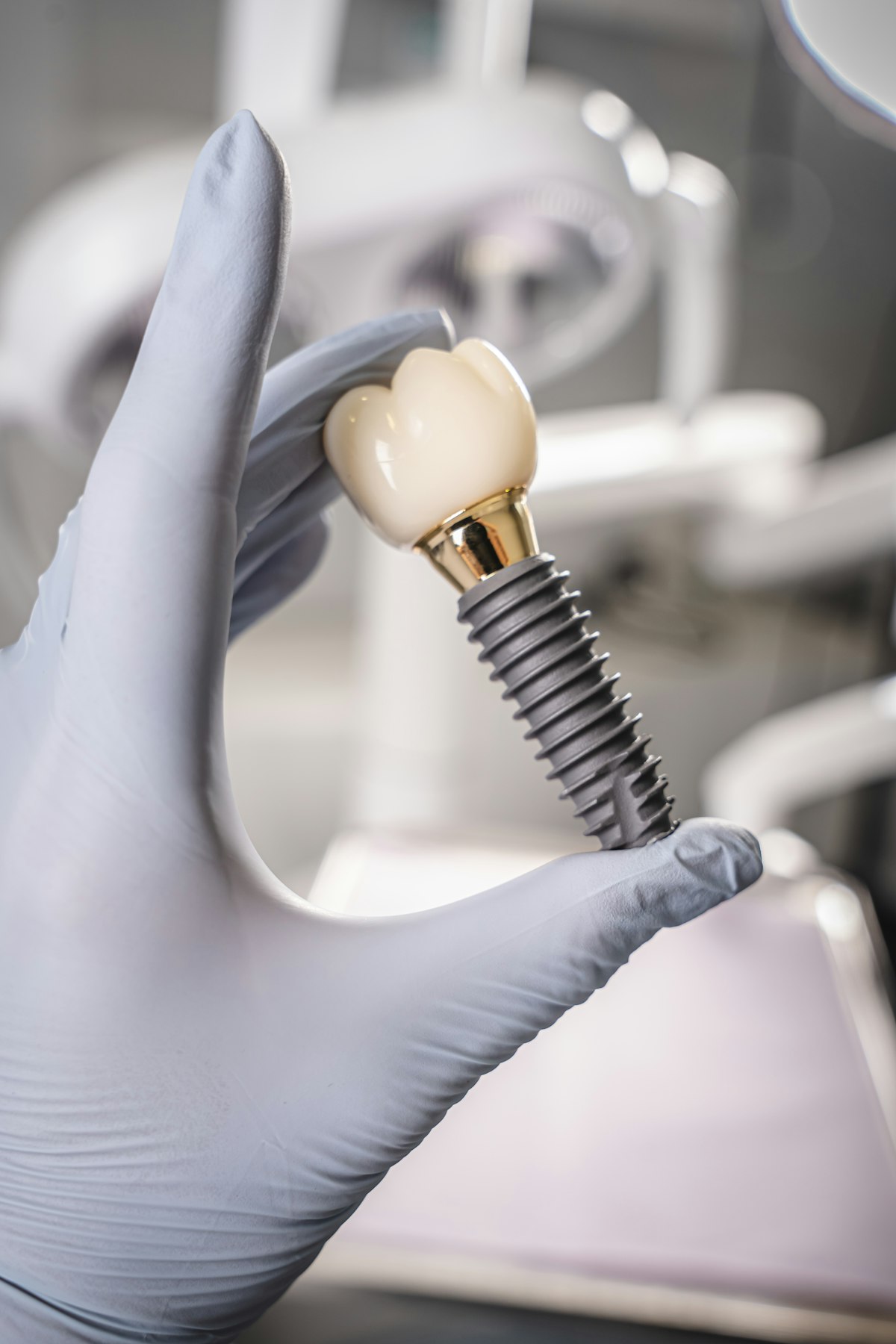
An implant takes a different approach entirely. A titanium or zirconia post is placed directly into the jawbone, where it fuses with the bone through a process called osseointegration over roughly 3 to 6 months. Once that post has integrated, it functions as an artificial root, and a custom crown gets attached on top. Neighboring teeth are left completely untouched.
Because the implant post transmits chewing forces into the bone the same way a natural root does, it actually preserves bone density in that area instead of allowing it to shrink. Implants succeed in the 95 to 98 percent range over the long term, and when they're placed and restored correctly, a well-maintained implant crown can last 20-plus years, often the rest of a patient's life.
Dental Implant vs Bridge: The Real Cost Comparison Over Time
On the day of treatment, a bridge is usually less expensive than an implant, and that upfront number is often what drives the decision. But cost only tells the truth if you measure it over the tooth's actual lifespan, not just the first year.
Here's a comparison I walk patients through often: a bridge that needs replacing after 8 years, plus retreatment on the two support crowns if decay or a fracture develops underneath them, can end up costing close to — or more than — an implant by year fifteen. An implant carries a higher day-one cost but nothing else to replace as long as the bone stays healthy and you keep up with cleanings. We accept CareCredit and Sunbit for patients who want the implant's long-term value but need to spread out the initial investment.
Bone Health: The Factor Most Patients Don't Ask About
The honest answer is that most patients walk in already leaning toward one option based on price, and the conversation that actually changes their mind is usually about bone. If a tooth has been missing for more than a year or two, there's often already measurable bone loss at that site, which can affect whether an implant is placeable without a bone graft first. A bridge sidesteps that question because it doesn't rely on the jawbone at all. That's exactly why, over time, it also does nothing to stop that bone from continuing to shrink.
This is the kind of detail that doesn't show up in a five-minute web search: two patients with the same missing tooth can end up with completely different treatment plans once we look at a 3D scan of the bone underneath. That's not an argument for implants in every case. For a patient with significant bone loss who doesn't want a grafting procedure, a well-made bridge can be the more realistic option, at least for now.
Which One Is Right for You?
If you're in that situation, here's what I'd tell you: healthy teeth on either side of the gap that you don't want touched, adequate jawbone, and a preference for a solution that lasts decades rather than a decade all point toward an implant. A compressed timeline, a lower upfront budget, or existing large fillings on the neighboring teeth that would need crowns anyway can make a bridge the more practical call. Neither one is the right choice in the abstract. Patients driving in from Summerfield, Oak Ridge, and around the Lake Jeanette area ask us this question constantly, and the answer always comes back to what a scan and exam actually show, not what sounds better on paper. You can learn more about our approach to tooth replacement at /dental-implants-greensboro-nc, and our patient resources page at /patient-resources has more detail on financing options.
Frequently Asked Questions About Dental Implants vs Dental Bridges
Is a dental implant more painful than getting a bridge? Most patients tell us implant placement is more comfortable than they expected, since it's done under local anesthesia and the healing discomfort is manageable with over-the-counter medication for a few days. Bridge preparation involves more immediate sensitivity because we're shaping down two live teeth, though that fades within a week or so.
Can I get a bridge now and switch to an implant later? Sometimes, yes, but not always cleanly. If bone loss has progressed significantly under the bridge site, you may need a bone graft before an implant becomes possible, which adds time and cost. It's worth discussing both options up front rather than assuming you can switch later without complications.
Does insurance cover implants or bridges better? It varies by plan, and honestly neither is guaranteed at 100 percent. Many NC dental plans cover a portion of a bridge under major restorative benefits, while implant coverage has expanded significantly in the last several years but still varies widely. Our team verifies your specific benefits before you commit to either option.
Ready to talk to a specialist? Dr. Brenes and the team at Lake Jeanette Dentistry are accepting new patients in Greensboro, NC. Call (336) 545-4281 or visit ljfamilydentist.com to book your consultation.
Comments