
What Is AI-Assisted X-Ray Analysis and How Does It Help You Understand Your Own Teeth?

When you sit down for X-rays at our Greensboro, NC office, there's a good chance a computer looks at that image before Dr. Brenes does. AI-assisted dental X-ray analysis has quietly become part of how we practice digital dentistry at Lake Jeanette Family & Implant Dentistry, and it changes something important for patients: you get to see exactly what the software flagged, in plain language, instead of just hearing "everything looks fine" and moving on to the next appointment.
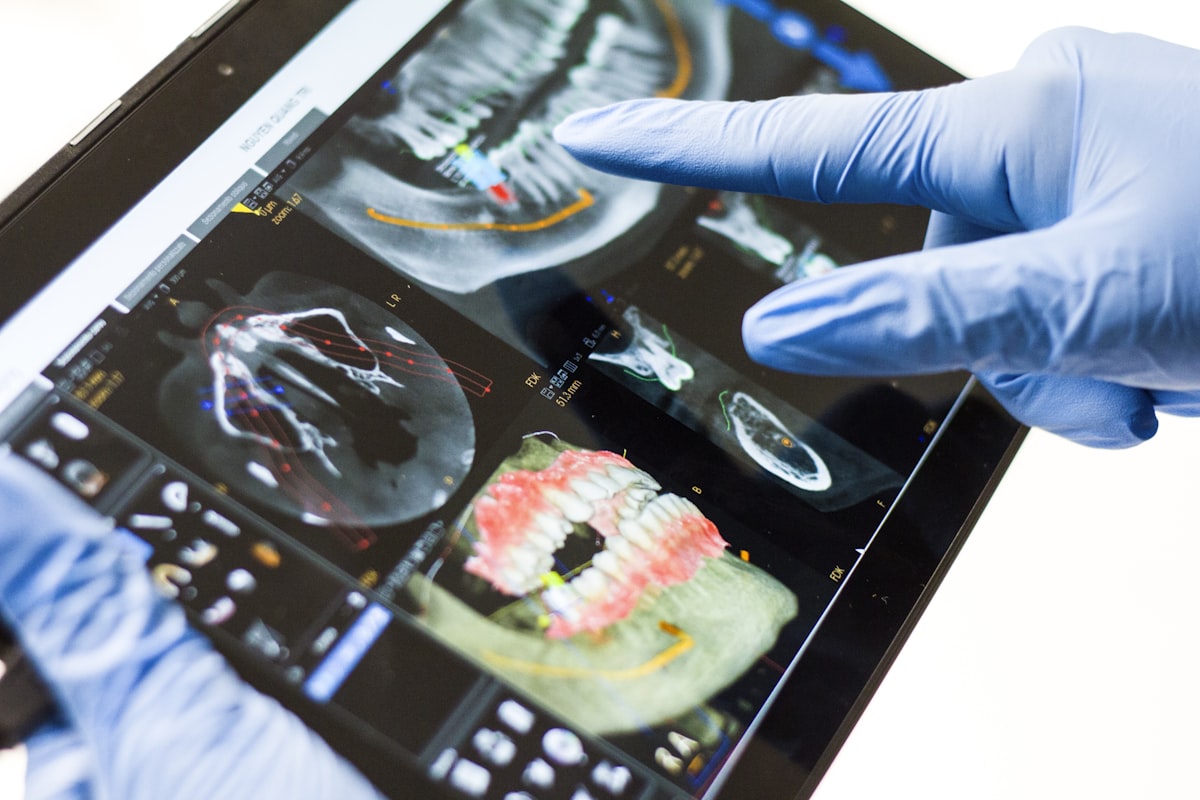
Here's the honest answer to what this technology actually does: the AI doesn't diagnose anything, and it never makes a treatment decision. It's pattern-recognition software trained on a large volume of dental images, and its only job is to highlight anything that deviates from healthy tooth structure or normal bone density: a shadow near a root tip, a dark line along a filling margin, early bone loss around a back molar. Dr. Brenes still reads every image and makes every call. What the software adds is a second set of eyes that never gets tired, never skips a section of the scan, and never assumes an X-ray is routine just because a patient looks and feels fine.
It isn't perfect, and that's fine. The software occasionally flags something that turns out to be nothing — an anatomical shadow, or an overlap caused by the angle the image was taken at. A false flag costs us thirty seconds of double-checking. A missed finding can cost a patient months, sometimes longer, of a problem growing quietly under a filling or along a root.
The pattern I watch closest, and the one where AI-assisted flagging has genuinely changed my own habits over years of reading images, is early decay between back molars — the tight space where a bitewing X-ray can show a shadow long before a patient feels anything or a cavity is visible with a mirror. Catch it there and it's usually a small, straightforward filling. Miss it for a year or two and it often turns into a much larger, more expensive procedure that could have been avoided with an earlier look. Published research on AI-assisted radiograph review has generally found it catches a meaningfully higher share of these incidental findings than an unaided read alone, with different studies putting the improvement somewhere in the range of 15 to 20 percent.
If you've ever left a dental office with a vague "you're all set" and no real explanation of what they actually looked at, here's what I'd tell you: that doesn't happen at Lake Jeanette Family & Implant Dentistry. Every image gets pulled up on the screen next to you, AI markers included, and you get walked through exactly what we're looking at and why it does or doesn't matter for your care.
What This Means for You at Lake Jeanette Family & Implant Dentistry
For patients across Greensboro and the wider Piedmont Triad, this technology isn't reserved for implant planning or full-arch cases. Every patient who comes through our door for a routine cleaning, a filling, or a family checkup gets the same AI-assisted review on their digital X-rays, because our standard of care is to walk every patient through everything we see, in plain language, before we ever recommend treatment. That holds whether you're here for a six-month cleaning or a more involved restorative case, and it's part of why our /patient-resources page is built around helping people understand their own dental health, not just booking the next appointment. If you'd like more on Dr. Brenes' training and how he approaches diagnosis, our /meet-dr-brenes page has the background.
Frequently Asked Questions About AI-Assisted X-Ray Analysis
Does the AI replace Dr. Brenes' judgment on my X-rays? No. Think of it as a checklist that never gets tired, not a decision-maker. It highlights areas worth a closer look, and Dr. Brenes reviews every single image himself before anything gets discussed with you or added to a treatment plan.
Is this only useful for implant or full-mouth patients? Not at all. We run the same AI-assisted review on X-rays for routine cleanings, fillings, and kids' checkups. Early decay and bone changes show up in general dentistry far more often than they show up in complex implant cases, so this technology matters most for our everyday family patients.
Will I actually see my own X-ray, or just get told the results? You'll see it. We turn the monitor around, point to what the software flagged, and explain in plain language what it means, whether that's "this is nothing to worry about" or "here's something worth watching at your next visit."
Ready to join our patient family? Dr. Brenes and the team at Lake Jeanette Family & Implant Dentistry welcome new patients of all ages for general and family dental care in Greensboro, NC. Call (336) 545-4281 or visit ljfamilydentist.com to book your visit.
Comments